MDDBa at ACS Spring 2026
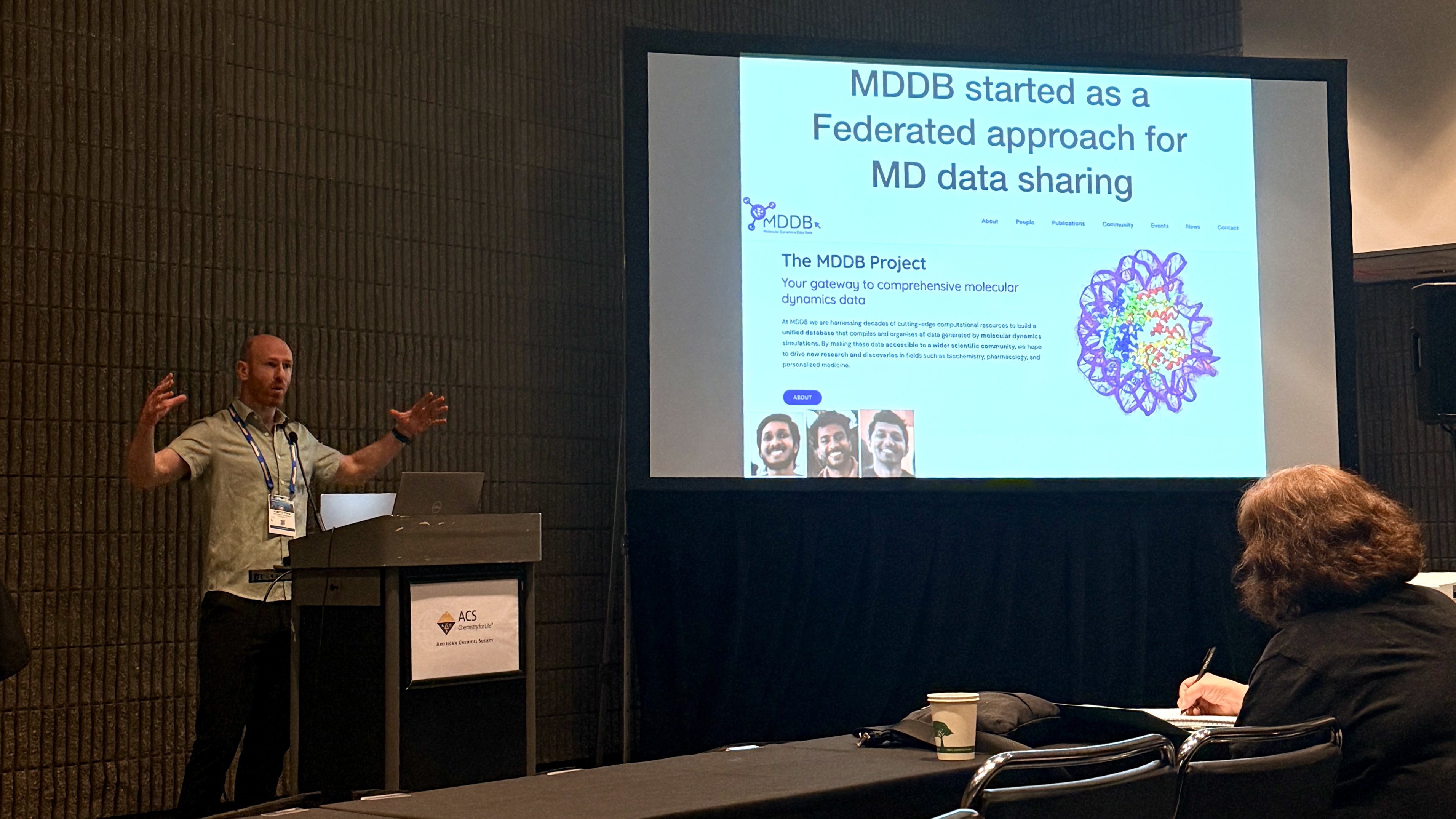
Prof. Alberto Perez presented the vision behind MDDB America at ACS Spring 2026. The Florida Node is the first MDDB node in America and approaching 1,000 projects.
Read moreA unified, FAIR-compliant repository for biosimulation data - empowering researchers across biochemistry, pharmacology, and personalized medicine.
MDDB-America offers a FAIR way of storing MD data produced with US resources. It is interoperable with European and Japanese efforts under the MDDB umbrella - allowing meta-analysis at the world wide level.
MDDBa Partnering with America's leading research institutions

Our Vision | FAIR Data
Building on FAIR data principles for all MD simulation data.
Persistent identifiers and rich metadata enable full discoverability of all simulation datasets.
Data retrievable via standardized, open, universally implementable protocols and APIs.
Formal shared vocabularies supporting integration with the broader life sciences data ecosystem.
Rich provenance and clear licensing enabling long-term reuse and reproducibility.
Access Our Nodes | Network
Europe's main node, grouping MDDB nodes across Europe around a central molecular dynamics repository.
Explore MDDB EuropeAmerica's main node. Its first node, the Florida Node, supports molecular dynamics data management in the U.S.
Explore the Florida NodeJapan's main node, grouping MDDB nodes across Japan for molecular dynamics simulations and data management.
Coming soonLatest Updates
Prof. Alberto Perez presented the vision behind MDDB America at ACS Spring 2026. The Florida Node is the first MDDB node in America and approaching 1,000 projects.
Read more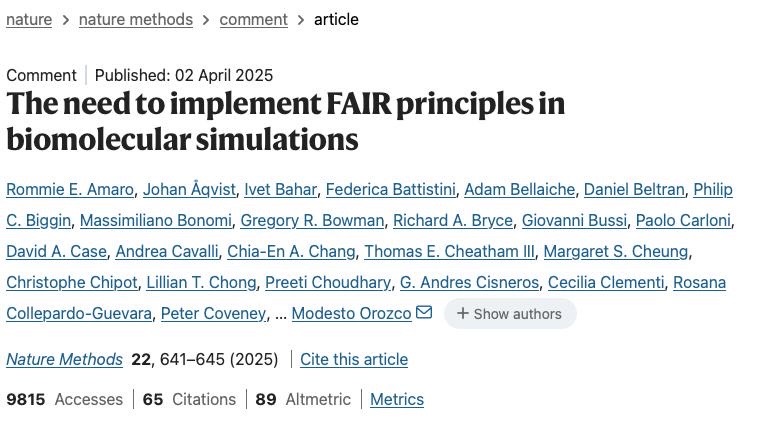
A landmark article published in Nature Methods.
Read more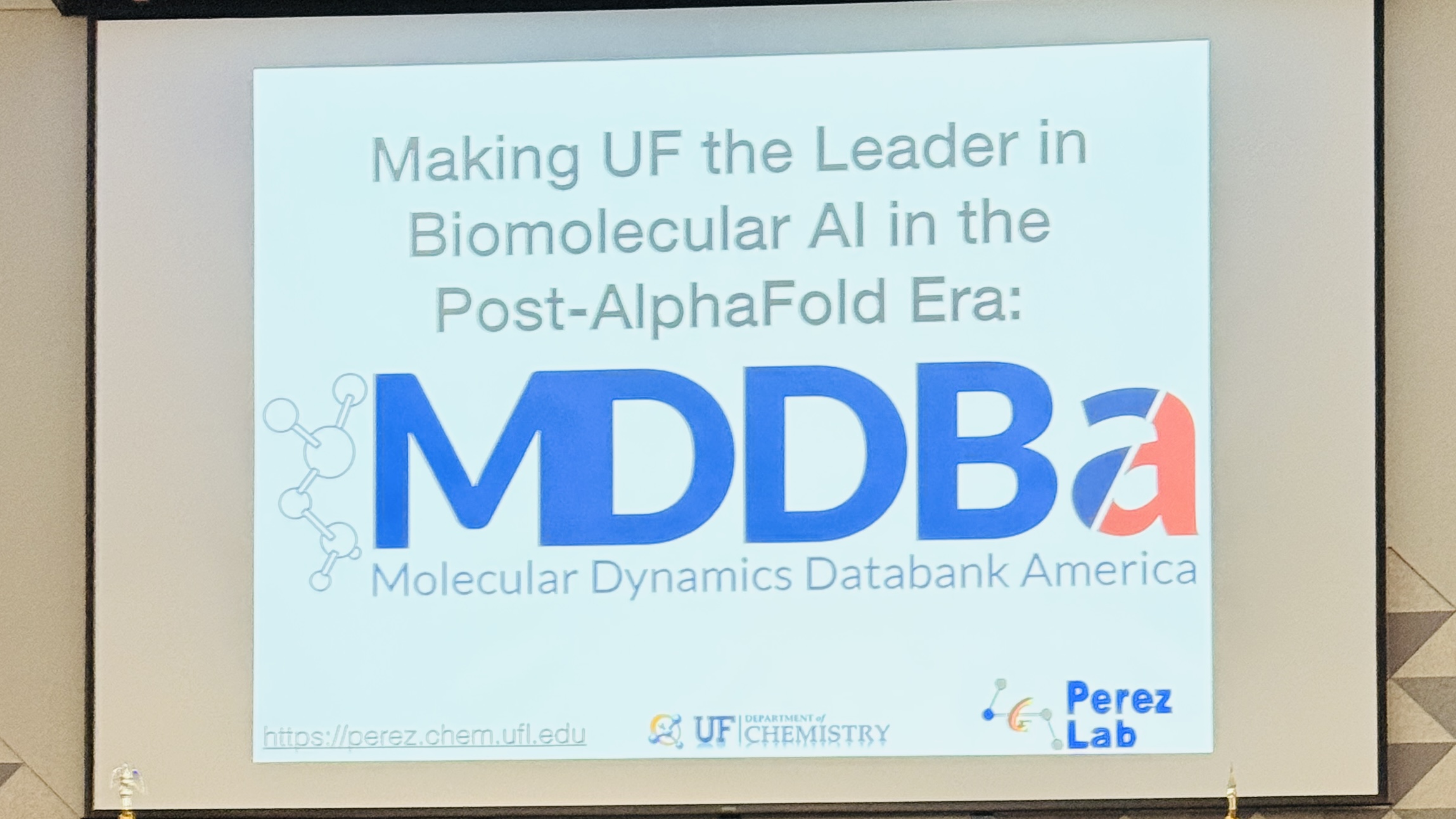
Our inaugural conference brought together leading researchers from across the Americas.
Read moreGet Involved
We recognise the need for a collaborative effort to create, establish, and sustain a database that allows findability, accessibility, interoperability, and reusability of molecular dynamics simulation data.
Funded by